Originally written for a Pecha Kucha presentation in Montréal, later developed into a stand-alone chamber piece for three or more performers (the ideal number probably being between three and seven). The subject is not the number of performers, but their quality of interaction, which is structured like a game.
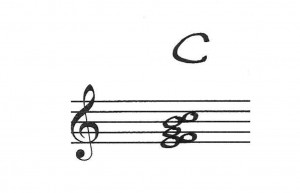
Each of the piece’s forty pages presents five, three, two or one pitches, and indicates an ensemble model, which is either C (for ‘collective’) or I (for ‘individual’). During C-pages, each pitch can be played at most once (in any octave) by the collective as a whole – so if, say, one player would play all notes given, nobody else can play – but during I-pages, each pitch can be played at most once (in any octave) by every individual performer – so that the maximum number of sounds is the number of notes given multiplied by the number of performers. Hence, contrary to what intuition might suggest, the C-pages are sparse, whereas the I-pages can be relatively dense. The structure of the work constantly alternates a sequence of seven pages marked C and having identical pitch collections, with sequences of four pages, having different pitch collections, and marked I.
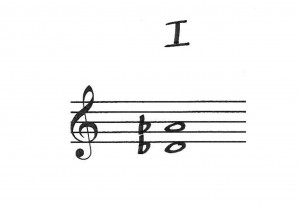
A trade-off appears in this piece between the two models. The I-pages tend to sound richer on average, since more notes can be played, as the performers do not need to take the others’ actions into account. The C-pages tend to sound more sparse, but the actions of every performer have consequences for the actions of other performers, since any note played by a performer can no longer be played by another performer, and that leads to a more complex interplay and a different kind of rhythm, a species of network time. During C pages, performers have to listen to one another and supplement each other, or they may ‘steal notes’ from one another, which creates more interaction, more performative tension. In the terms of this essay, two temporal fields of very different dimensions are projected into the real time of performance, leading to a difference in performance attitude and musical quality. It is this shift, back and forth, between subjectivities that forms the real subject of this piece. Complete individual liberty is audibly opposed to collective articulations. The two models of the title are based on rules that are almost identically formulated, yet the musical economies that they produce are incommensurable.